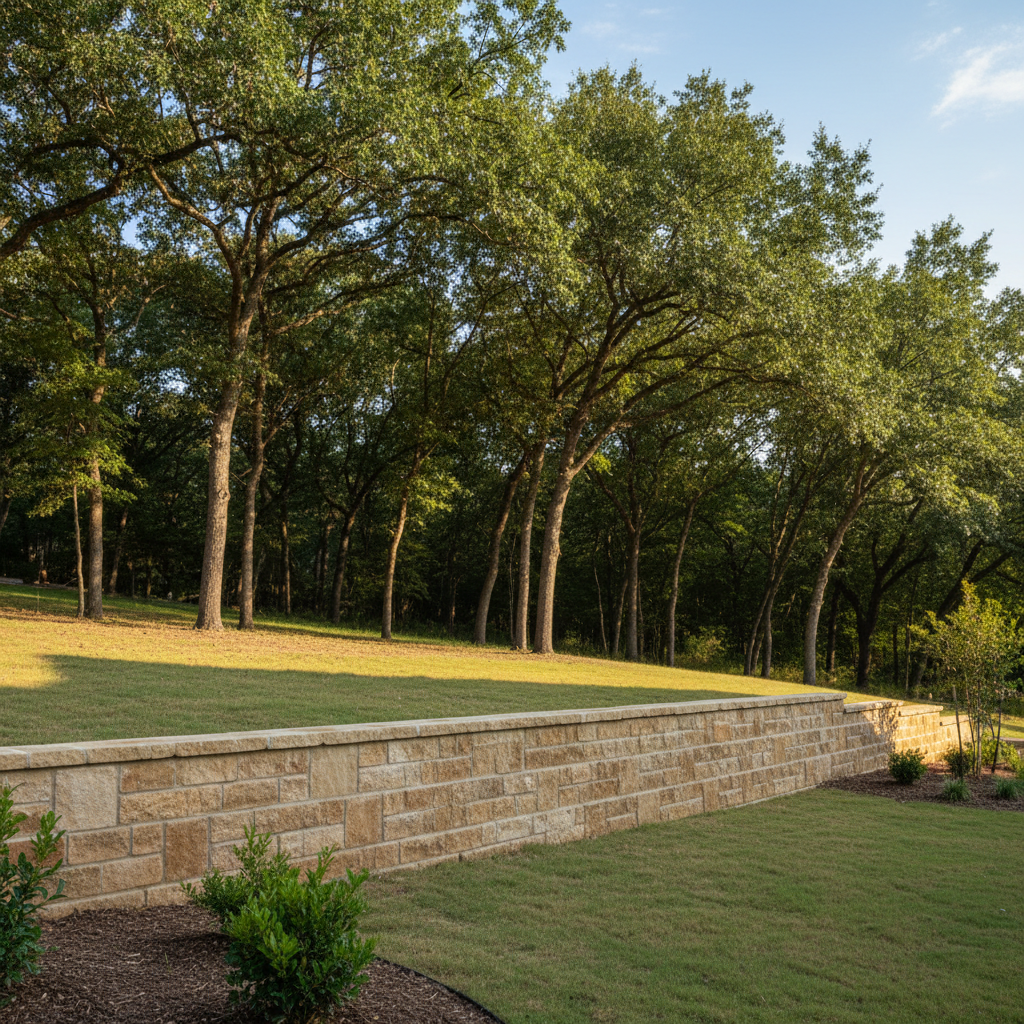
A Retaining Wall in your yard is fighting a constant battle against heavy clay soil and torrential downpours. If you live around Fulshear, TX, you already know how volatile our local ground can be. Expansive clay swells up when it rains heavily and shrinks right back down during those scorching August dry spells. That relentless push and pull puts pressure on masonry structures. Valley Masonry Inc sees plenty of Retaining Wall structures take damage because routine upkeep gets neglected.
What Regular Maintenance For A Retaining Wall Looks Like
You do not need special tools to keep a Retaining Wall healthy in Fulshear, TX. Start by keeping a close eye on the drainage pipes and weep holes. If leaves, mulch, or dirt block those outlets, water gets trapped behind the masonry of the Retaining Wall. Trapped water has nowhere to go, so it pushes outward and creates structural stress. Clear out any debris after heavy storms roll through Fort Bend County. You must also check the grading right behind the top of the Retaining Wall. Water should not pool up in a puddle against the back edge. Instead, make sure the ground slopes away so rainwater runs off the property.
- Walk the length of your Retaining Wall twice a year to check for shifts in Fulshear, TX.
- Pull weeds and stubborn roots before they wedge into mortar joints on the Retaining Wall.
- Keep mulch and soil levels even across the top tier of the Retaining Wall.
Warning Signs Your Retaining Wall Is Failing
Catching problems early saves you from paying for a total teardown later on a Retaining Wall in Fulshear, TX. Keep an eye out for horizontal cracks running through the mortar or blocks of the Retaining Wall. That usually means earth pressure is pushing against the structure. If sections of the Retaining Wall start leaning forward or stones begin to pop loose, you have a structural issue on your property. White, powdery buildup called efflorescence is not always a crisis, but heavy staining or pooling water near the base tells you the internal drainage system of the Retaining Wall is failing.
When to Call a Professional For Retaining Wall Services
Some minor cosmetic tuckpointing is fine for a Saturday project, but structural movement on a Retaining Wall requires an experienced mason. If you notice the Retaining Wall shifting away from the soil or sinking into the ground, you should call a professional masonry contractor. Fixing drainage failures or rebuilding a compromised section of a Retaining Wall safely takes heavy gear and specialized masonry knowledge. Valley Masonry Inc provides Retaining Wall services for homes and businesses in Fulshear, TX.